


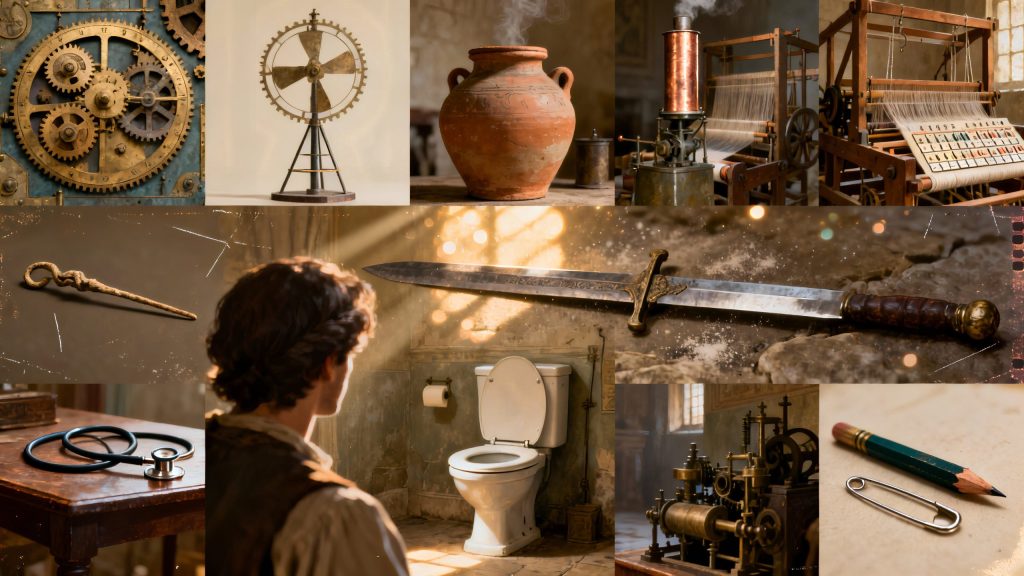
Have you ever stopped to think about the gadgets and tools that make your day easier, but you have no idea who invented them or when? History is packed with celebrated breakthroughs like the smartphone or the airplane, but what about the forgotten inventions that changed the world in subtle ways? These unsung heroes quietly transformed how we live, work, and even think.
In this article, we’ll uncover 10 such innovations that slipped under the radar. From ancient mechanical wonders to simple household items, they prove that big changes often come from quiet corners. Let’s explore these hidden gems and see why they still matter today.
The Antikythera Mechanism: An Ancient Marvel of Prediction
Picture this: divers in the early 1900s stumble upon a rusty bronze contraption at the bottom of the Mediterranean Sea. What they found was the Antikythera Mechanism, a gear-filled device from around 100 BC that acted like an early astronomical calculator. It tracked the moon’s phases, predicted solar eclipses, and even followed the movements of planets.
This wasn’t just a fancy toy—it showed that ancient Greeks had a grasp on mechanics that rivals today’s tech. Forgotten for millennia, it’s now seen as the world’s first analog computer.
Why It Still Echoes Today:
- Paved the way for modern clocks and computers through its intricate gearing system.
- Challenges our views on ancient tech, proving early societies were engineering whizzes.
- Inspires current designs in robotics and precision instruments.
If you’re into how old tech influences new gadgets, this one might make you rethink history’s timeline.
The Baghdad Battery: Sparks from the Past
Back in the 1930s, archaeologists in Iraq unearthed clay pots that looked ordinary at first glance. Inside were copper tubes and iron rods, leading some experts to speculate these “Baghdad Batteries” from 250 BC could produce a tiny electric charge—maybe for electroplating jewelry or even basic medical treatments.
The debate rages on about their true use, but the idea of electricity tinkering in ancient times flips the script on when humans first harnessed power. It’s a reminder that lost knowledge from old civilizations could hold keys to forgotten innovations.
Key Impacts:
- Hints at early experiments with voltaic cells, predating official electricity discoveries by centuries.
- Fuels modern curiosity in alternative energy sources and historical science.
- Shows how cultural exchanges in ancient Mesopotamia sparked ideas that echo in today’s batteries.
Imagine if we’d kept that knowledge alive—our tech timeline might look very different.
The Aeolipile: Steam’s Early Whirl
In the bustling workshops of 1st-century Alexandria, an engineer named Hero created a spinning sphere powered by steam. The Aeolipile was basically a hollow ball on a kettle; when water boiled, jets of steam made it rotate like a primitive turbine.
It was more of a curiosity than a machine back then, but this device laid the groundwork for steam engines that drove the Industrial Revolution. Forgotten inventions like this highlight how ideas can simmer for ages before boiling over into change.
Lasting Legacy:
- Demonstrated steam’s potential for motion, influencing everything from trains to power plants.
- Encourages engineers today to revisit old concepts for sustainable energy solutions.
- Proves that playfulness in invention can lead to practical breakthroughs down the line.
Next time you see a steam-powered device, tip your hat to this ancient spinner.
The Jacquard Loom: Weaving the Future of Tech
Fast-forward to 1804 in France, where Joseph Marie Jacquard revolutionized textile making with a loom controlled by punched cards. These cards “programmed” patterns, allowing complex designs without endless manual tweaks.
This wasn’t just about prettier fabrics—it birthed the idea of programmable devices. Think about it: those cards inspired early computers, from Babbage’s analytical engine to IBM’s data processors. It’s a classic case of one industry’s forgotten invention sparking another.
Why It Transformed Industries:
- Bridged crafting and computing, making automation accessible.
- Boosted efficiency in manufacturing, setting the stage for mass production.
- Reminds us that cross-field ideas often drive the biggest leaps forward.
In our digital age, it’s fun to trace coding back to weaving threads.
Damascus Steel: Blades That Defied Time
During the Middle Ages, swordsmiths in the Middle East forged Damascus steel—blades so tough and sharp they could slice through armor like butter. The secret? A special mix of iron and carbon, hammered into wavy patterns that added strength and beauty.
The technique vanished around the 18th century, but scientists today are still trying to replicate it for modern tools and knives. This lost art shows how forgotten inventions can leave a sharp edge on history.
Enduring Influence:
- Advanced metallurgy, inspiring high-performance alloys in aerospace and sports gear.
- Symbolizes the blend of art and science in craftsmanship.
- Teaches modern makers about sustainable, durable materials.
Those legendary swords weren’t just weapons; they were engineering masterpieces.
The Hairpin: Taming Chaos with Simplicity
Hairpins might seem too basic to call an invention, but trace them back to ancient Egypt, where they were crafted from bone or metal to hold hairstyles in place. Over centuries, they’ve evolved but stayed essential for anyone wrangling their locks.
This tiny tool solved a universal problem with elegance, proving that forgotten inventions don’t need to be complex to change daily routines.
Everyday Wins:
- Enables quick styling, saving time in busy lives.
- Reflects cultural shifts in fashion and grooming across eras.
- Highlights how small fixes can have massive, ongoing utility.
Grab one next time, and appreciate its timeless cleverness.
The Stethoscope: Hearing Health’s Secrets
In 1816, French doctor René Laennec got tired of pressing his ear to patients’ chests. His solution? A rolled-up paper tube that amplified sounds—the first stethoscope. It soon became wooden, then more advanced, but the core idea stuck.
This shift made diagnostics less invasive and more accurate, turning medicine from guesswork to precision. It’s one of those forgotten inventions that quietly saved countless lives.
Health Game-Changer:
- Opened doors to non-invasive checks, evolving into digital versions today.
- Boosted understanding of heart and lung issues worldwide.
- Shows how necessity drives simple yet profound tools.
Doctors still swear by it, a nod to its lasting brilliance.
The Flush Toilet: A Clean Break from the Past
Ancient Romans had basic plumbing, but the flush toilet as we know it kicked off in 1596 with John Harington’s design for Queen Elizabeth I. Later tweaks made it reliable, cutting down on smells and diseases.
This invention transformed hygiene, making cities healthier and lives more comfortable. Forgotten? Maybe, but try imagining a world without it.
Sanitation Superhero:
- Curbed outbreaks by improving waste management.
- Paved the way for modern plumbing systems globally.
- Underscores how infrastructure innovations boost public health.
It’s the unsung hero of clean living.
The Mechanical Pencil: Sharp Ideas Without the Hassle
The 19th century brought the mechanical pencil, a clickable wonder that dispensed lead without constant sharpening. It became a staple for draftsmen, writers, and students needing precision.
This tool streamlined creativity, letting ideas flow without interruptions. Among forgotten inventions, it’s a quiet efficiency booster.
Precision Perks:
- Essential for detailed work in engineering and art.
- Reduces waste compared to traditional pencils.
- Evolves with features like erasers and grips today.
It’s proof that refining basics can spark productivity.
The Safety Pin: Fastening Life’s Loose Ends
In 1849, American inventor Walter Hunt whipped up the safety pin to pay off a debt. Its coiled design prevented pricks while securing fabrics, and it’s barely changed since.
From diapers to quick fixes, this pin handles life’s little emergencies. Simple, yes—but brilliantly effective.
Daily Defender:
- Adds safety to everyday tasks like clothing repairs.
- Versatile in crafts, first aid, and more.
- Exemplifies affordable, accessible innovation.
Don’t underestimate its grip on history.
Why These Forgotten Inventions Still Inspire Us
Looking back at these 10 forgotten inventions that changed the world, it’s clear they share a theme: quiet power. They didn’t grab headlines, but they reshaped societies, sparked new ideas, and solved real problems. From ancient gears to modern pins, they remind us that innovation isn’t always flashy—sometimes it’s the subtle shifts that last.
Next time you use a battery or tie your hair, pause and wonder about the minds behind them. History’s hidden layers are full of lessons for today’s creators. If this sparked your curiosity, why not explore more untold stories? Share your favorite overlooked invention in the comments!
FAQ
What are some forgotten inventions that changed the world from ancient times?
Ancient ones like the Antikythera Mechanism and Aeolipile show early smarts in computing and steam power. They influenced modern tech without much credit, proving old civilizations had advanced engineering skills.
How did the Jacquard Loom influence modern computers?
Its punched-card system was an early form of programming, inspiring pioneers like Charles Babbage. This cross-over from textiles to tech highlights how forgotten inventions can jumpstart entirely new fields.
Why is the stethoscope considered a forgotten invention despite its daily use?
While essential now, its humble origins as a wooden tube in 1816 often get overlooked. It revolutionized diagnostics but blends into medical routines, making it easy to forget its game-changing role.
Are there any lost techniques from forgotten inventions we can’t replicate today?
Yes, like Damascus steel’s forging secrets, which modern scientists struggle to match perfectly. These mysteries push ongoing research in materials science.
How can learning about forgotten inventions benefit modern innovators?
They encourage thinking outside the box, revisiting old ideas for new applications. Plus, they show that even small, overlooked creations can have massive, lasting impacts on society.
These forgotten inventions reveal the understated brilliance threaded through human history. They teach us to value the quiet contributors that build our world. If you’re hungry for more, check out related reads or dig into historical archives—there’s always more to uncover.