


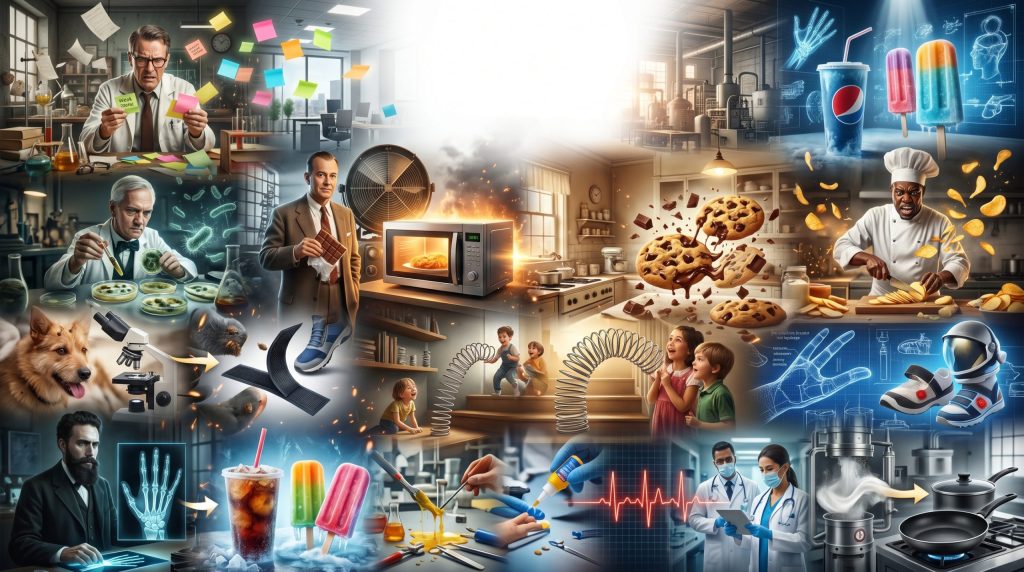
We’ve all had those facepalm moments—dropping your phone in the toilet, burning dinner, or sending an email to the wrong person. But what if I told you that some of the most game-changing stuff in your daily life came from exactly those kinds of blunders? Yeah, the things you rely on without a second thought, like that quick zap in the microwave or the antibiotic that knocked out your last infection, weren’t born from flawless plans. They were happy accidents, simple mistakes that turned into strokes of genius. In this article, we’re unpacking how everyday inventions from mistakes have shaped our world in ways no one saw coming. From a forgotten lab dish to a spiteful chef’s revenge, these stories of accidental discoveries in everyday items will make you rethink failure. If you’re the type who beats yourself up over small slip-ups, this might just convince you that your next oops could be the next big thing. We’ll explore the wild origins, the people behind them, and why these mishaps matter today—let’s dive in and celebrate the beauty of imperfection.
Life’s full of curveballs, and innovation is no exception. History shows that about 50% of major breakthroughs happen by chance, not careful calculation. These aren’t just quirky tales; they’re lessons in resilience and creativity. As we go through these examples, you’ll see how curiosity turned potential disasters into daily essentials. Who knows? Maybe it’ll inspire you to experiment more in your own kitchen or garage.
Post-it Notes: The Glue That Failed Spectacularly
Picture this: You’re a scientist gunning for a super-strong adhesive that could revolutionize airplanes. Instead, you whip up something so wimpy it barely sticks to paper. Sounds like a career-ender, right? That’s what Spencer Silver thought back in 1968 at 3M. He was tinkering with acrylates for heavy-duty glue, but his low-tack version was a total dud—repositionable, sure, but useless for the job. For years, it collected dust, labeled a failure.
Fast forward to 1974, when colleague Art Fry got annoyed with bookmarks slipping out of his church hymnal. Remembering Silver’s “mistake,” Fry slapped the adhesive on paper scraps, creating removable notes. But launch wasn’t smooth; early markets ignored them until free samples sparked buzz. By 1980, Post-it Notes exploded, now a $1 billion business with billions sold yearly. They’re everywhere—from office brainstorms to fridge reminders—proving weak can be wonderful. Without this adhesive flop, organization might still mean staples and mess. It’s a sticky reminder that rethinking errors leads to everyday magic.
Microwave Oven: A Chocolate Bar’s Meltdown Moment
War tech and snacks don’t mix, or so Percy Spencer thought in 1945. Working on radar magnetrons at Raytheon during WWII, he noticed a peanut cluster bar in his pocket had turned to mush while testing equipment. Intrigued, he tried popcorn—it popped wildly—and an egg, which exploded. This “mistake” revealed microwaves could heat food by vibrating water molecules.
Early prototypes were monsters: 6 feet tall, 750 pounds, and $5,000 a pop in 1947. Dubbed Radaranges, they flopped commercially due to size and cost. It took until the late 1960s for countertop models to catch on, thanks to Japanese tech tweaks. Now, 90% of homes have one, slashing cooking time and enabling frozen meals. Spencer’s sweet slip-up transformed kitchens worldwide—think about reheating pizza without it! This accidental discovery in everyday items shows how wartime work birthed peacetime perks.
Penicillin: The Moldy Lab Oversight That Saved Lives
Labs aren’t always spotless, and thank goodness for that. In 1928, Alexander Fleming dashed off for vacation, leaving petri dishes of bacteria uncovered. Returning, he spotted mold on one—Penicillium notatum—killing nearby staph germs. Instead of trashing it, Fleming probed, uncovering its antibacterial power.
Isolation was tough; his efforts stalled until WWII, when Howard Florey and Ernst Chain scaled production. Early doses were recycled from patients’ urine! By 1945, it treated soldiers, cutting infection deaths dramatically. Penicillin kickstarted antibiotics, saving over 200 million lives since. From ear infections to surgery, it’s indispensable. Fleming’s forgetfulness turned a simple mistake into medicine’s hero—without it, minor cuts could be deadly.
Chocolate Chip Cookies: A Baking Shortcut Gone Wrong
Who hasn’t craved a warm chocolate chip cookie? But this treat was a total flub by Ruth Wakefield in the 1930s at her Toll House Inn. Short on baker’s chocolate, she chopped a Nestlé semi-sweet bar, assuming it’d melt into the dough. Nope—the bits stayed chunky, creating gooey pockets.
Guests flipped, and the recipe went viral via radio and papers. Nestlé bought rights in 1939, printing it on packages and launching morsels. Now, it’s America’s top cookie, with 7 billion eaten yearly. Wakefield’s improv birthed a baking staple—desserts without those melty surprises? Unthinkable. This kitchen error proves substitutions can sweeten history.
Potato Chips: Revenge on a Picky Eater
Complaints can sting, but for chef George Crum in 1853, one led to snack gold. At Saratoga’s Moon Lake Lodge, a diner (maybe Vanderbilt) griped about soggy, thick fries. Irked, Crum sliced potatoes ultra-thin, fried them crisp, and over-salted, hoping to annoy. The customer loved it!
“Saratoga chips” spread, but packaging delayed mass appeal until 1920s wax bags. Herman Lay industrialized them in the 1930s. Today, the $35 billion industry offers endless flavors. Crum’s spite created crunch culture—movie nights without chips? Boring. A simple mistake of temper turned irritation into indulgence.
Velcro: Nature’s Prickly Inspiration
Hikes can be annoying, but George de Mestral’s 1941 Swiss Alps trek with his dog changed fastening forever. Burrs clung stubbornly to clothes and fur. Microscope inspection revealed tiny hooks snagging loops. He mimicked it with nylon, patenting Velcro in 1955.
Initial versions were costly and loud, flopping until NASA used it for spacesuits in the 1960s. Now, it’s in sneakers, bags, and braces, a $1 billion market. De Mestral’s burr bother pioneered biomimicry—without it, zippers might rule. This accidental hook-up shows nature’s “mistakes” hold genius.
Slinky: The Spring That Took a Tumble
Naval engineer Richard James aimed for ship-stabilizing springs in 1943. One fell off a shelf, “walking” down books. Amazed, he and wife Betty toy-ified it.
Debuting in 1945, 400 sold out fast at a Philly store. Over 300 million later, it’s a toy icon and physics tool. James’s drop turned tension into fun—childhood without stair-walking coils? Less bouncy.
X-Rays: An Unexpected Glow in the Dark
Physics experiments can surprise, as Wilhelm Röntgen learned in 1895. Testing cathode rays, he saw a distant screen glow, even shielded. These “X-rays” imaged his wife’s hand, bones visible.
Early uses risked burns, but it revolutionized diagnostics. Now, X-rays detect fractures and cancers globally. Röntgen’s anomaly changed medicine—without it, hidden ailments stay hidden.
Popsicles: A Freezing Forgetful Night
Kids invent too! In 1905, 11-year-old Frank Epperson left soda with a stick outside; it froze overnight. He patented “Epsicles” in 1923; kids renamed them Popsicles.
Billions sold annually, they’re summer saviors. Epperson’s lapse cooled us off—hot days without icy treats? Sweaty.
Super Glue: The Sticky Lab Wrecker
In WWII, Harry Coover sought clear plastic gun sights but got cyanoacrylate—a mess that bonded everything. Rediscovered in 1951 for jets, it became Super Glue by 1958.
From fixes to surgery, it’s essential. Coover’s gooey error stuck around—repairs without it? Tricky.
Pacemaker: The Wrong Resistor’s Rhythm
Wilson Greatbatch built a heart recorder in 1958 but grabbed the wrong resistor, creating a pulsing circuit mimicking heartbeats. He miniaturized it into the first implantable pacemaker.
Millions implanted, saving lives from arrhythmias. Greatbatch’s mix-up beat on—cardiac care without it? Riskier.
Teflon: A Gas Gone Solid
Roy Plunkett’s 1938 refrigerant gas solidified into slippery PTFE. Wartime uses led to Teflon pans in the 1950s.
Non-stick cooking eased life. Plunkett’s flub slid into kitchens—scrubbing without it? Tedious.
These tales of how simple mistakes led to some of the best everyday inventions flip the script on failure. From melted chocolate to moldy messes, they’ve enhanced health, convenience, and fun. Embrace your errors—they might innovate next. What’s your best mistake story? Share below! For more, check our piece on breakfast origins.