


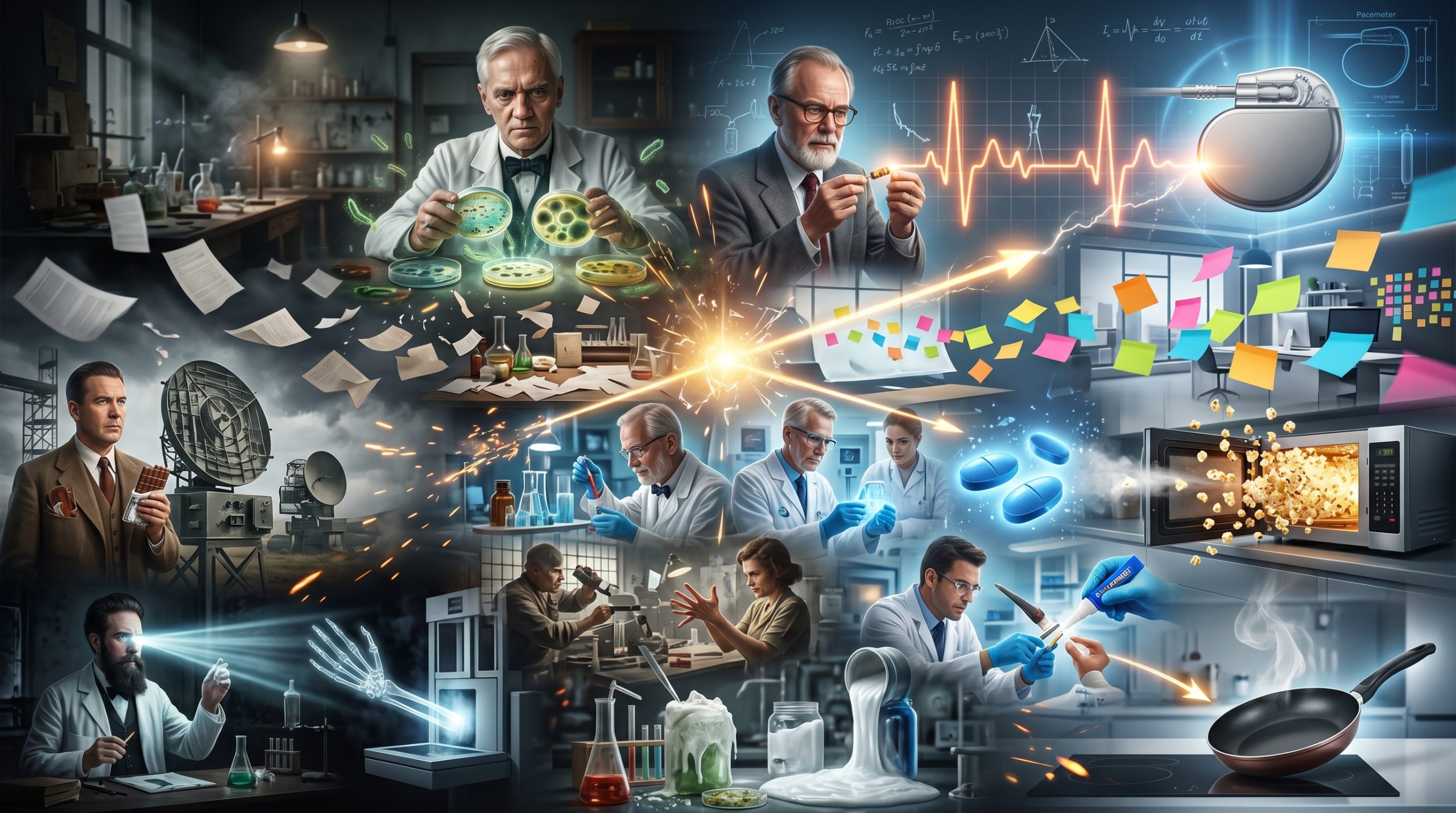
Ever had one of those days where everything goes wrong, but somehow it turns out better than expected? That’s kind of how innovation works sometimes. We often picture inventors as genius types huddled over blueprints, meticulously crafting the next big thing. But reality? It’s messier. A lot of world-changing inventions started as epic fails—botched experiments, wrong turns, or outright disasters that could have ended careers. Yet, these mishaps didn’t just fizzle out; they sparked revolutions in medicine, technology, and everyday life. In this article, we’re diving into eight inventions that were total disasters at first but ended up reshaping our world. From a sloppy lab that saved millions of lives to a melted candy bar that transformed kitchens, these stories show how failure isn’t the end—it’s often the beginning. If you’re into quirky history or just need a reminder that your next screw-up could be a breakthrough, keep reading. We’ll explore each one, unpacking the chaos and the triumph, and maybe inspire you to embrace your own mishaps along the way.
Think about it: without these so-called disasters, modern medicine might still be stuck in the dark ages, or your quick lunch might take hours. These tales aren’t just trivia; they’re proof that persistence pays off. So, let’s jump in and see how these failed inventions that succeeded later became legends.
Penicillin: The Moldy Mess That Conquered Infections
Picture this: It’s 1928, and Scottish scientist Alexander Fleming is heading off on vacation. In a rush, he leaves his lab in disarray, with petri dishes full of Staphylococcus bacteria scattered around. When he returns two weeks later, one dish catches his eye—it’s contaminated with mold, and oddly, the bacteria around it are dead. What could have been a simple cleanup turned into one of the greatest medical breakthroughs ever. Fleming realized the mold, Penicillium notatum, was producing a substance that killed bacteria. But here’s the disaster part: His initial attempts to isolate and produce it in large quantities failed miserably. It took over a decade, and the urgency of World War II, for Howard Florey and Ernst Chain to refine it into a usable antibiotic. Even then, early production was so limited they had to recycle urine from patients to extract more!
Penicillin’s journey from lab flop to lifesaver is epic. Before it, simple infections like cuts or pneumonia were often fatal. During WWII, it slashed death rates from bacterial infections by up to 95%. Today, it’s the foundation for countless antibiotics, saving millions annually. But imagine if Fleming had just tossed that dish—medicine might look very different. This failed experiment didn’t just change healthcare; it kicked off the antibiotic era, though overuse now poses new challenges like resistance. Still, it’s a reminder that sometimes, a little mess goes a long way.
The Pacemaker: A Shocking Electrical Blunder
Heart problems have plagued humanity forever, but in the 1950s, treating irregular rhythms meant bulky external devices the size of TVs. Enter Wilson Greatbatch, an engineer trying to build a heart rhythm recorder. He reached into a box for a resistor and grabbed the wrong one—way off in size. When he plugged it in, the circuit didn’t record sounds; instead, it pulsed like a human heartbeat. Talk about a total disaster! Greatbatch could have scrapped it, but he saw potential. He spent years miniaturizing it into an implantable device, patenting the first successful one in 1960.
Early pacemakers weren’t perfect—batteries lasted only months, requiring frequent surgeries. But this accidental invention paved the way for modern versions that last years and even adjust to activity levels. Over 3 million people worldwide now have pacemakers, preventing sudden cardiac deaths and extending lives. Without Greatbatch’s mistake, cardiac care might still rely on outdated tech. It’s a heartwarming (pun intended) story of how a simple error can beat the odds and change medicine forever.
Post-it Notes: The Glue That Wouldn’t Stick
In the late 1960s, 3M chemist Spencer Silver was tasked with creating a super-strong adhesive for aerospace. What he got? A weak, repositionable glue that barely held anything—a complete flop. For years, it gathered dust as a “solution without a problem.” Then, colleague Art Fry, frustrated with bookmarks falling out of his hymnal, tried Silver’s glue on paper scraps. Voilà—the Post-it Note was born in 1977. But even then, it nearly bombed; initial market tests failed because people didn’t understand the concept. 3M handed out free samples, and word-of-mouth turned it into a hit.
Today, we produce billions of these sticky notes yearly, revolutionizing organization in offices, homes, and schools. They’re everywhere, from brainstorming sessions to fridge reminders. This failed invention that succeeded later shows how reimagining a disaster can create something indispensable. Without it, our desks might be buried in loose papers, and collaboration would feel clunkier. It’s sticky proof that weakness can be a strength.
Microwave Oven: The Chocolate Bar Catastrophe
During World War II, engineer Percy Spencer was working on radar tech at Raytheon, fiddling with magnetrons that produce microwaves. One day, a chocolate bar in his pocket melted mysteriously. Curious, he tested popcorn (it popped) and an egg (it exploded). This “disaster” revealed microwaves could heat food by agitating water molecules. But early models in 1947 were giants—over 5 feet tall, 750 pounds, and $5,000 each. Sales tanked due to size and cost.
It took decades and smaller designs for microwaves to hit homes in the 1960s. Now, they’re in 90% of U.S. households, saving time on everything from reheating leftovers to cooking meals. Without Spencer’s snack mishap, kitchens might still rely on slow ovens. This accidental discovery changed how we eat, making convenience king. Next time you zap a meal, toast to that melted bar—it was a delicious disaster.
Viagra: The Heart Drug That Went South
In the 1980s, Pfizer was developing sildenafil as a treatment for angina and high blood pressure. Trials showed it didn’t work well for the heart—but participants reported an unexpected side effect: improved erections. What a flop turned phenomenon! Pfizer pivoted, patenting it as Viagra in 1996 and getting FDA approval in 1998. Sales soared past $1 billion yearly.
This failed heart med revolutionized treatment for erectile dysfunction, affecting millions and sparking conversations about men’s health. It’s also used for pulmonary hypertension. Without this “disaster,” many might still suffer in silence. It’s a blue-pill reminder that side effects can be the main event, changing medicine and relationships worldwide.
Super Glue: The Wartime Plastic Fiasco
World War II chemist Harry Coover was trying to make clear plastic gun sights for Eastman Kodak. Instead, he created cyanoacrylate—a sticky mess that ruined equipment. Shelved as a failure, it resurfaced nine years later when Coover needed heat-resistant polymers for jets. Turns out, it bonded anything instantly. Marketed as Super Glue in 1958, it became a household hero.
From fixing broken vases to medical uses like closing wounds, Super Glue is ubiquitous. Annual sales hit millions. This botched plastic changed repair work, proving disasters can stick around for good.
X-Rays: The Invisible Ray Blunder
In 1895, physicist Wilhelm Röntgen was experimenting with cathode-ray tubes to make lightbulbs. He noticed rays penetrating a cardboard box, casting shadows on a screen. This accidental radiation, dubbed X-rays, imaged his wife’s hand, revealing bones. Early uses were risky—overexposure caused burns—but it transformed diagnostics.
X-rays now detect fractures, tumors, and more, saving lives daily. Without Röntgen’s mishap, medical imaging might lag. It’s a glowing example of how unseen disasters illuminate the future.
Teflon: The Slippery Chemical Slip-Up
In 1938, DuPont chemist Roy Plunkett was working on refrigerants when a gas turned into a white, slippery powder—polytetrafluoroethylene (PTFE). A total lab disaster, but it was heat-resistant and non-stick. Wartime secrecy delayed it, but by the 1950s, it coated pans as Teflon.
Non-stick cookware changed kitchens, making cleanup easy. It’s also in gear and medical devices. This failed gas birthed a slick revolution.
We’ve seen how these eight inventions started as disasters—wrong parts, messy labs, melted snacks—but ended up transforming medicine, tech, and daily life. They remind us failure is fertile ground for innovation. Got a favorite flop-turned-win? Drop it in the comments! For more on accidental discoveries, check related reads.
