


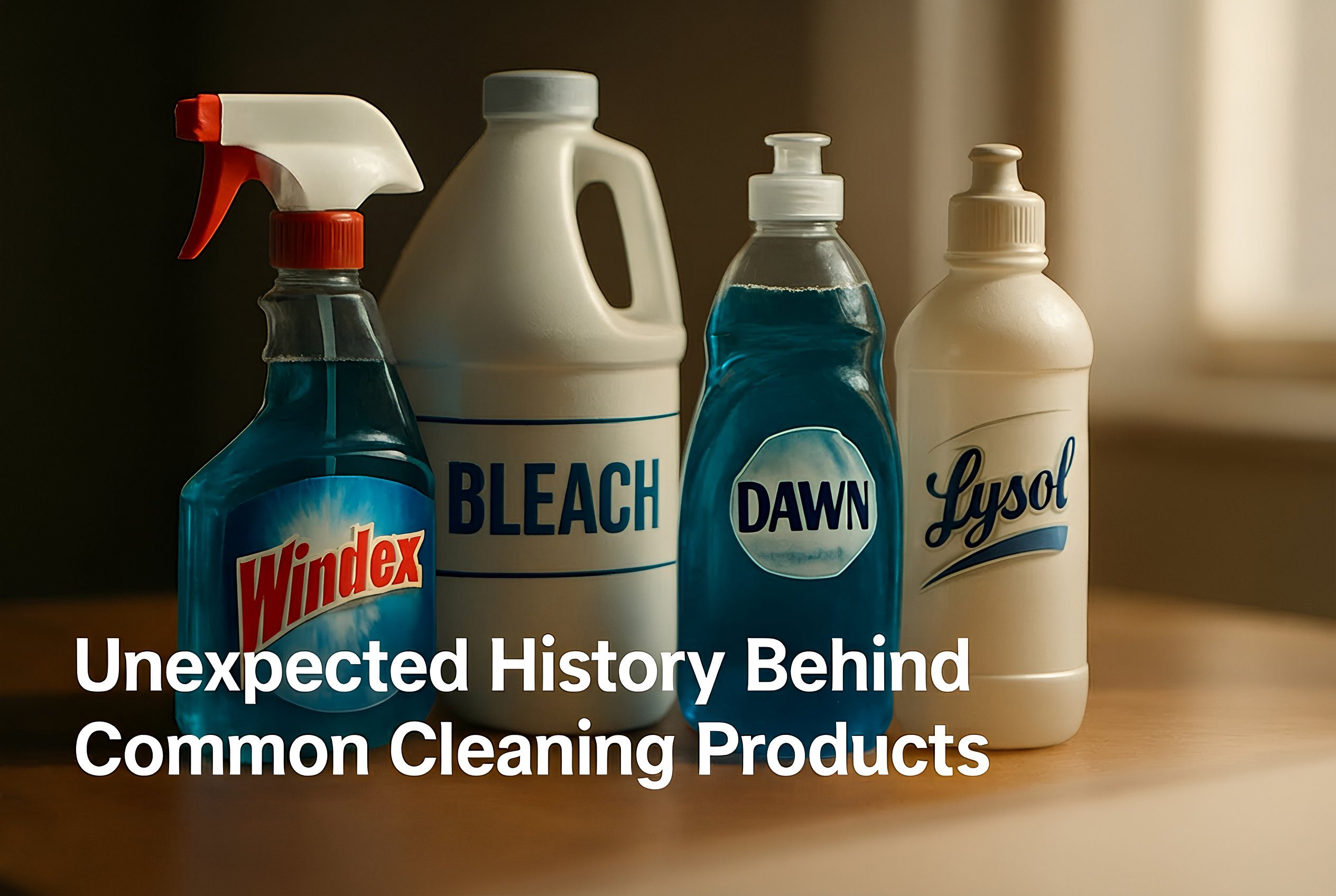
Ever grabbed a bottle of bleach or sprayed some Windex and wondered how these everyday heroes ended up under your sink? Cleaning products seem so straightforward—squirt, wipe, done—but their origins are full of surprises. From ancient accidental discoveries to wartime innovations, medical mishaps, and wildlife rescues, the stories behind these staples are anything but boring.
We’re diving into the wild backstories of some of the most common cleaning products in your home. You’ll learn how bleach went from fabric whitener to pandemic fighter, why Dawn became the go-to for oil-spill rescues, and the shocking (and sometimes dangerous) ways Lysol was once marketed. These tales highlight human ingenuity, a dash of luck, and lessons in adaptation. Stick around—you might never look at your cleaning caddy the same way again.
Bleach: From Sun-Bleached Linens to Household Hero
Bleach feels like a modern miracle for whitening and disinfecting, but its roots go way back. Ancient Egyptians around 5000 BC spread fabrics in the sun to naturally bleach them white using sunlight and water—basically the original “bleachfield.” By the 18th century, Europeans soaked clothes in alkaline lye baths followed by acid soaks, a process that could take six months!
The game-changer came in 1774 when Swedish chemist Carl Wilhelm Scheele discovered chlorine gas. French scientist Claude Berthollet realized its bleaching power in 1785, leading to “eau de Javel” (named after a Paris suburb). In 1799, Charles Tennant created bleaching powder by combining chlorine with lime—easier to handle and ship. This sped up textile bleaching dramatically.
Household liquid bleach exploded in the early 20th century. Clorox started selling it in 1913 for laundry. During pandemics like the 1918 flu and later cholera outbreaks, bleach’s disinfectant properties shone—it’s still a go-to for killing germs today. Fun twist: What started as a textile trick became a lifesaver in water treatment and surface cleaning.
Quick Bleach Timeline
- Ancient times: Sun and water bleaching.
- Late 1700s: Chlorine discovered and applied.
- 1913: Clorox commercial liquid bleach.
- Modern use: Disinfectant staple during health crises.
If you’re using bleach safely (dilute it!), remember those long-ago sun-soakers paved the way.
Windex: Born in the Depression as a Windshield Saver
Picture the Great Depression—people scraping by, cars covered in grime from dusty roads. In 1933 (some sources say 1936), Philip Drackett invented a blue liquid cleaner specifically for automobile windshields. Originally sold in small glass bottles, it cut through grease and left no streaks—perfect for drivers needing clear vision.
Drackett’s company had already hit it big with Drano drain cleaner, so expanding to glass made sense. By the 1950s, as homes got more windows and TVs (smudgy screens!), Windex became a household name. SC Johnson acquired it in the 1990s, expanding to multi-surface formulas.
The unexpected part? It started as a car accessory during tough times, not a home essential. Now it’s synonymous with streak-free shine—talk about evolving with the times.
Why It Stuck
- Depression-era practicality for car owners.
- Ammonia-based formula for tough grime.
- Blue color? Marketing genius—looks “clean.”
Next time you spritz your mirrors, thank those 1930s drivers.
Dawn Dish Soap: From Kitchen Sink to Wildlife Rescue Icon
Dawn launched in 1973 by Procter & Gamble as a grease-cutting dish liquid—nothing revolutionary at first. But its petroleum-based surfactants made it exceptional at breaking down oils.
The surprise came in 1978 when researchers tested dish soaps on oil-covered birds after spills. Dawn outperformed everything else—gentle yet effective. Then came the Exxon Valdez spill in 1989: Dawn volunteers cleaned thousands of birds, turning it into a hero product. The same happened with Deepwater Horizon in 2010.
P&G leaned into this goodwill—donating bottles and running campaigns. Ironically, its oil-fighting power comes partly from petroleum derivatives. Who knew your dish soap would save penguins?
Dawn’s Unexpected Legacy
- Invented in the ’70s for dishes.
- 1980s–2010s: Oil spill superstar.
- Still donates to wildlife rescues.
If you’re eco-conscious, note: Modern formulas aim to balance cleaning power with safety.
Mr. Clean: Ship Scrubber to Bald, Buff Icon
Mr. Clean debuted in 1958, but his formula started earlier. Linwood Burton, a marine cleaning businessman, created a less-toxic all-purpose cleaner for ships on the East Coast. He partnered with entrepreneur Mathusan Chandramohan and sold the rights to Procter & Gamble.
P&G turned it into a household star with the muscular, bald mascot—originally conceived as a genie for “magic” cleaning. Artist Richard Black drew him in white, with a gold earring (some say sailor-inspired). By the 1960s, Mr. Clean was everywhere, promising spotless homes.
The twist? It began as an industrial ship cleaner—harsh environments demanded something tough yet safer. Now it’s a fun, recognizable brand.
Mascot Evolution
- 1950s: Industrial origins.
- 1958: TV debut with live-action actor.
- Today: Still cleaning with that confident grin.
Lysol: Cholera Fighter Turned Controversial “Hygiene” Product
Lysol started in 1889 in Germany as Liquor Cresolis Compositus to combat a cholera epidemic—developed by Gustav Raupenstrauch as a safer disinfectant than carbolic acid.
Imported to the US, it fought germs during the 1918 Spanish flu. But the shocking history? From the 1920s to 1960s, vintage ads subtly promoted Lysol as a feminine hygiene douche and even implied contraceptive use (despite being ineffective and dangerous—cresol caused burns and deaths in some cases).
By the 1950s, the formula changed to safer ingredients, shifting focus to surface disinfection. Today, it’s a trusted germ-killer, especially post-pandemic.
Dark to Bright
- 1889: Anti-cholera disinfectant.
- Early 20th century: “Feminine hygiene” marketing (dangerous!).
- Modern: Household staple for surfaces.
A reminder: Always follow current labels—safety has evolved hugely.
Vinegar and Baking Soda: Ancient Staples, Modern Myths
These aren’t branded products, but they’re in every “natural cleaning” arsenal. Vinegar (acetic acid) dates to ancient Babylonians for preserving and cleaning; baking soda (sodium bicarbonate) has roots in mineral deposits used for millennia.
Together? The fizzing reaction (acid + base = CO2 gas, water, salt) looks impressive, but it mostly neutralizes both—leaving mild abrasive action at best. The real power comes from using them separately: baking soda scrubs, vinegar dissolves minerals.
Unexpected fact: Many “hacks” overhype the combo—science says apply one, then the other for better results. They’ve been cleaning longer than most chemicals!
Pro Tips
- Vinegar: Great for hard water stains.
- Baking soda: Absorbs odors, gentle abrasive.
- Combo myth: Fizz is fun, but not the cleaning magic.
Conclusion: From Ancient Goop to Modern Bottles
These cleaning products started with accidents, necessities, and bold ideas—turning into essentials that make life easier and safer. Bleach from sun fields, Dawn saving wildlife, Lysol’s rocky past—each has a story of adaptation.
Next time you clean, appreciate the history. What’s your go-to product, and did any of these surprise you? Share in the comments—I’d love to hear your cleaning tales or hacks!
