

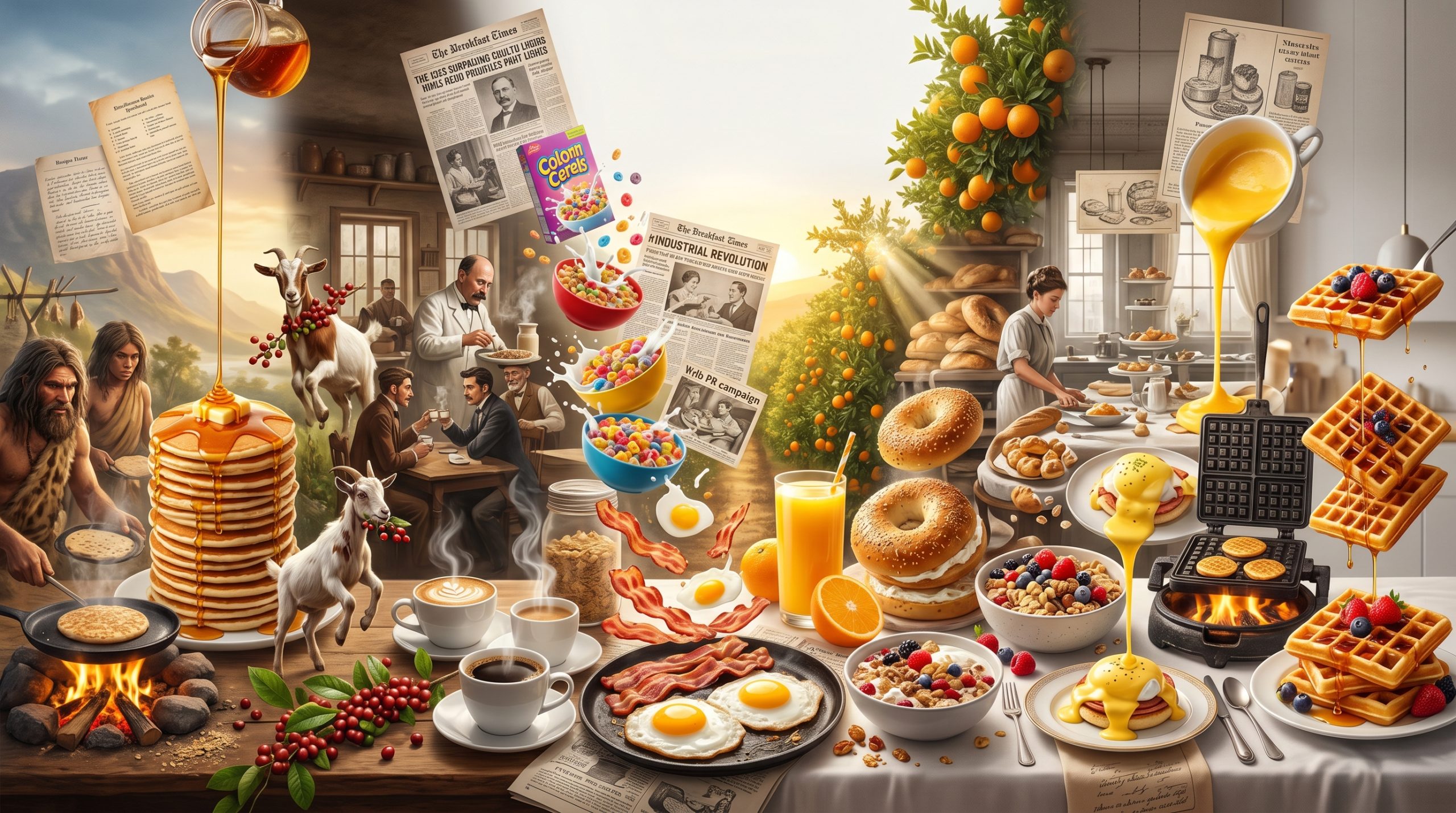
Ever woken up to the smell of sizzling bacon or poured yourself a bowl of crunchy cereal, thinking it’s just another ordinary morning ritual? Think again. The foods we casually munch on to kickstart our day have wild backstories that could rival any adventure novel—full of health fads, marketing geniuses, and even prehistoric munchies. In this eye-opening exploration of surprising facts about breakfast foods, we’ll uncover the origins of popular breakfast foods that might make you see your plate in a whole new light. From a doctor’s quirky quest to curb bad habits leading to corn flakes, to a PR stunt that paired bacon with eggs forever, these tales blend history, culture, and a dash of serendipity. Whether you’re a breakfast enthusiast or someone who skips it (gasp!), these surprising breakfast origins will add some flavor to your knowledge. Stick around as we dive into the history of breakfast food items like cereal, pancakes, and more—trust me, you’ll never look at your morning meal the same way.
Breakfast hasn’t always been the structured affair it is today. In ancient times, people grabbed whatever was handy, often leftovers or simple grains. But as societies evolved, so did our plates. The Industrial Revolution played a huge role, shifting folks from farm life to factory shifts, demanding quick, energy-packed starts. Yet, many of our go-to items stem from unexpected places. Let’s break it down, one bite at a time, and reveal how these everyday staples came to be.
The Shocking Health Roots of Breakfast Cereal
If you think cereal is just a kid’s sugary delight, buckle up for one of the most surprising facts about breakfast foods. Breakfast cereal’s origins trace back to the 19th century, not as a fun morning treat, but as a tool in a bizarre health crusade. Dr. James Caleb Jackson, running a sanatorium in upstate New York, invented the first cold cereal called Granula in 1863. It was made from baked graham flour crumbled into hard bits that needed overnight soaking in milk to eat. Why? Jackson believed digestive issues caused all sorts of ailments, and this bland, tough stuff was meant to cure them.
But the real twist comes with the Kellogg brothers. John Harvey Kellogg, a devout Seventh-day Adventist and superintendent of a health spa in Michigan, created his version to promote a plain diet that suppressed… well, sexual urges. He thought spicy or rich foods led to “sinful” behaviors like masturbation, so he baked wheat dough into flakes. His brother Will added sugar later, sparking a family feud but launching Kellogg’s Corn Flakes. By the early 1900s, cereal was marketed as a convenient health food, especially for busy families. Advertising in the 1940s even coined “the most important meal of the day” to sell Grape-Nuts. Today, the global cereal market is worth billions, but who knew it started as anti-sex food? Next time you pour a bowl, remember—it’s got a puritanical past.
Bacon and Eggs: A Masterful Marketing Ploy
Ah, the classic bacon and eggs duo—seems timeless, right? Wrong. This pairing is one of the sneakiest origins of popular breakfast foods, engineered by a PR wizard in the 1920s. Americans back then ate light mornings: toast, coffee, maybe fruit. But the Beech-Nut Packing Company wanted to boost bacon sales. They hired Edward Bernays, Sigmund Freud’s nephew and the “father of public relations,” who surveyed doctors and got them to endorse hearty breakfasts for energy. Newspapers spread the word: “Doctors say eat bacon and eggs!”
Suddenly, sales skyrocketed, and the combo stuck. Eggs were already around—ancient Romans loved them for breakfast, believing they provided a fresh start since hens lay in the morning. But bacon? It was preserved pork, popular for preservation, but not specifically morning fare until this campaign. In the UK, bacon has older roots in full English breakfasts from the Industrial Revolution, fueling workers. Now, it’s a staple worldwide, with variations like Canadian bacon or turkey alternatives. This story shows how marketing shapes our plates—without Bernays, your brunch might be bacon-free!
Pancakes: From Prehistoric Times to Your Plate
Pancakes might be the oldest breakfast food with surprising origins that stretch back to the Stone Age. Analysis of ancient tools suggests humans have been making pancake-like foods from starchy grains for energy since prehistoric times. Otzi the Iceman, a 5,300-year-old mummy, likely ate a wheat-based pancake as one of his last meals. Talk about ancient grub!
In ancient Greece and Rome, pancakes (or “tagenias” and “placenta”) were fried in olive oil with honey. They evolved through the Middle Ages, becoming Shrove Tuesday staples to use up eggs and fat before Lent. Colonists brought them to America, where Native Americans influenced versions with cornmeal. By the 19th century, pancakes were everyday fare, with hash browns gaining traction around the same time. Modern twists include fluffy buttermilk stacks or global variants like French crepes or Indian dosas. What’s surprising? Despite their age, pancakes remain versatile—sweet, savory, or even gluten-free. They’ve survived millennia because they’re simple, filling, and oh-so-adaptable.
The Buzz on Coffee: Rebellion in a Cup
No breakfast chat is complete without coffee, but its morning dominance has rebellious roots. In America, coffee surged after the 1773 Boston Tea Party, when patriots ditched British tea for coffee as a protest symbol. Before that, tea ruled, but the Revolution flipped the script.
Coffee’s global origins are even wilder: Legend says an Ethiopian goatherd noticed his goats dancing after eating coffee berries in the 9th century. It spread to the Arab world as “qahwa,” brewed in coffee houses that were social hubs (and sometimes banned for being too radical). By the 17th century, it hit Europe, and colonists brought it to the New World. Today, it’s the world’s second-most traded commodity after oil. Surprising fact: Early ads positioned it as a health drink, much like orange juice later. Speaking of which…
Orange Juice: From Surplus to Sunrise Staple
That glass of OJ? It’s a marketing marvel among surprising breakfast origins. In 1916, a California orange glut led growers to push “Drink an orange” campaigns, touting vitamin C benefits for breakfast. Before, oranges were luxury treats, not juice.
Frozen concentrate in the 1940s made it affordable and widespread, thanks to wartime tech. Now, it’s synonymous with mornings, but historically, fruits like figs or apples were more common in ancient breakfasts. Fun twist: In some cultures, like Egypt, breakfast includes ful medames (fava beans) instead. OJ’s rise shows how ads turned excess into essential—without that surplus, your smoothie might be apple-based!
Bagels: An Immigrant Success Story
Bagels, with their chewy goodness, have origins tied to Jewish immigrants fleeing persecution. Between 1880 and 1920, over 2.5 million Jews arrived in the U.S., many Poles who opened bakeries. By 1910, New York was bagel central, even forming a union in 1915.
Legend traces bagels to 17th-century Poland, honoring a king’s stirrup (“beugel”). Boiled then baked for that signature texture, they were street food before becoming breakfast icons with cream cheese (a Philly invention). Surprising? Early bagels were handmade, and automation in the 1960s spread them nationwide. Without immigration waves, this holey delight might’ve stayed overseas.
Granola: From Spa Food to Snack Bar
Granola’s history echoes cereal’s: James Caleb Jackson’s Granula inspired John Harvey Kellogg’s Granola after a lawsuit. It was health spa fare, baked into clusters for digestion.
The 1960s hippie movement revived it as a natural food, leading to today’s bars and yogurts. Ancient peoples ate similar grain mixes, but modern granola adds nuts, fruits, and sweeteners. It’s a testament to how health trends recycle— from Victorian cures to millennial wellness.
Toast and Beyond: Forgotten Favorites
Milk toast was a 19th-century New England hit: Buttered toast cubed and soaked in warm milk, sweet or savory. It birthed “milquetoast” for timid folks. Codfish balls or creamed cod were hotel breakfasts in the early 1900s, while pork and beans fueled Yankee Sundays.
These faded as convenience foods rose, but they highlight breakfast’s evolution from leftovers to specialized meals. In colonial America, cornmeal porridge with bacon was common.
Eggs Benedict: A Hangover Cure Legend
This posh dish has debated origins— one tale: A hungover Wall Street broker at the Waldorf Hotel in 1894 requested toast, bacon, poached eggs, and hollandaise. Another credits a New York socialite. Either way, it became a brunch star in the early 20th century, blending French sauce with English muffins.
Waffles: Medieval Wafers Gone Crispy
Waffles started as “wafers” in medieval Europe, cooked in irons over fires. Dutch immigrants brought them to America in the 1620s, and Thomas Jefferson popularized waffle parties after buying irons in France. Electric versions in 1911 made them home-friendly. Surprising: They’re older than you think, evolving from communion wafers!
Wrapping up these surprising facts about the origins of popular breakfast foods, it’s clear our mornings are a mashup of history, hype, and happenstance. From cereal’s puritan beginnings to bacon’s ad-driven rise, these stories add depth to daily routines. What’s your wildest breakfast tale? Share in the comments! For more food history, explore our piece on dinner evolutions.
