


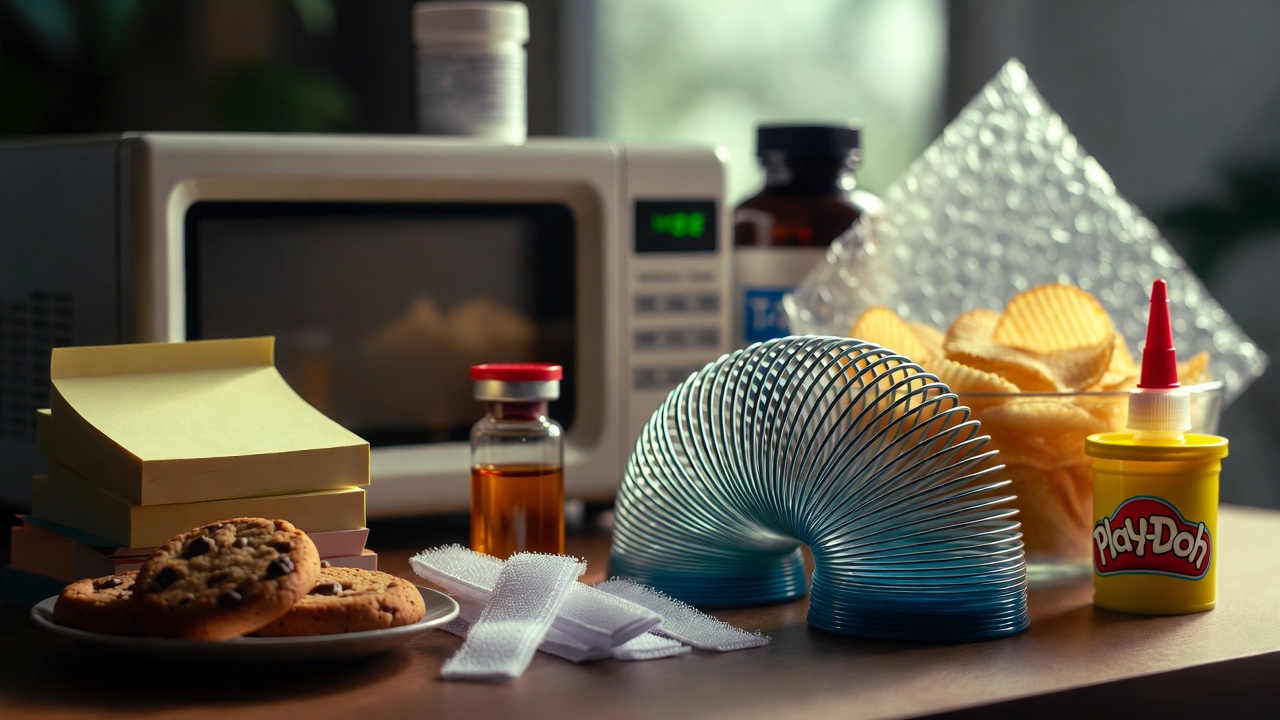
Have you ever stopped to think about the stuff we use every day—the sticky notes on your desk, the microwave in your kitchen, or even the chocolate chips in your cookies? What if I told you that many of these everyday objects that almost never existed were just one mishap away from being tossed into the trash heap of history? It’s wild to imagine a world without them, right? These surprising stories of everyday objects that almost never existed reveal how serendipity, stubborn inventors, and sheer luck turned potential failures into household staples. From accidental discoveries to products that bombed in their original form, we’ll dive into the twists and turns that brought these items to life. Stick around as we uncover the behind-the-scenes drama, because you might never look at your fridge or toolbox the same way again.
In this article, I’ll share some of the most fascinating tales of near-miss inventions. We’ll explore how these objects dodged oblivion and became part of our daily routines. Whether you’re a history buff, a trivia lover, or just curious about the origins of common items, these stories highlight the unpredictable path of innovation. Let’s jump in and discover why everyday objects that almost never existed are a testament to human creativity—and a bit of good fortune.
The Post-it Note: A Sticky Accident That Nearly Stuck in the Lab
Picture this: It’s the 1970s, and you’re a scientist at 3M trying to create a super-strong adhesive. Instead, you end up with a glue that’s weak and repositionable. Sounds like a flop, doesn’t it? That’s exactly what happened to Spencer Silver, who invented the adhesive behind the Post-it Note. For years, this “failed” glue sat on the shelf, dismissed as useless because it didn’t bond permanently. Everyday objects that almost never existed often start like this—a promising idea that doesn’t quite hit the mark.
But then, along came Art Fry, another 3M employee frustrated with bookmarks falling out of his hymnal during church choir practice. He remembered Silver’s adhesive and thought, “What if I could make notes that stick but don’t damage the pages?” It was a lightbulb moment, but even then, the product faced hurdles. Initial tests showed people didn’t understand its value; they saw it as just fancy paper. 3M almost shelved it after poor market trials in the late ’70s. Fry persisted, handing out samples to colleagues, and word spread organically.
Fast forward to 1980, and Post-it Notes launched nationwide. Today, they’re everywhere—from office brainstorming sessions to fridge reminders. The surprising story here? That weak glue, meant for something else entirely, revolutionized organization. Without Fry’s choir mishap, we might still be using tape or pins. It’s a reminder that sometimes, failure is just innovation in disguise. If you’ve ever jotted down a quick idea on a yellow square, thank those near-miss moments at 3M.
To dive deeper, consider how this ties into modern productivity hacks. For instance, using Post-its for Kanban boards or mind mapping can boost your workflow. I’ve tried it myself during writing sessions, and it’s a game-changer—keeps ideas visible without cluttering my screen.
Microwave Oven: From Wartime Radar to Kitchen Essential
War technology turning into kitchen appliances? Sounds far-fetched, but that’s the origin of the microwave oven, one of those everyday objects that almost never existed for civilian use. Back in World War II, Percy Spencer was working on radar systems for Raytheon when he noticed a candy bar in his pocket melting while near a magnetron tube. Curious, he experimented with popcorn and eggs, leading to explosive results—and the birth of microwave cooking.
Post-war, Raytheon patented the idea, but early models were massive beasts, standing over five feet tall and weighing hundreds of pounds. Priced at thousands of dollars, they were aimed at restaurants, not homes. Skeptics thought it was a gimmick; who needs to cook with invisible waves? Radiation fears didn’t help, and sales flopped initially. By the 1950s, the company nearly abandoned consumer versions, focusing on industrial uses instead.
What turned it around? Shrinking technology and clever marketing in the 1960s. Amana, a Raytheon subsidiary, introduced countertop models, and as prices dropped below $500 by the ’70s, households caught on. Now, over 90% of American homes have one. The surprising story of everyday objects that almost never existed like the microwave shows how wartime innovations can pivot to peace-time perks.
Think about it: Without Spencer’s melted chocolate, we’d still be waiting ages for leftovers to heat up. I’ve burned countless pots on the stove before owning a microwave—trust me, it’s a lifesaver for busy days. If you’re into tech history, check out similar stories like how GPS evolved from military tech.
Chocolate Chip Cookies: A Sweet Substitution Born from Necessity
Who doesn’t love biting into a warm chocolate chip cookie? But this iconic treat is among the everyday objects that almost never existed in its current form. In the 1930s, Ruth Wakefield ran the Toll House Inn in Massachusetts. One day, short on baker’s chocolate for her Butter Drop Do cookies, she chopped up a Nestlé semi-sweet chocolate bar, expecting it to melt fully.
Surprise—it didn’t. The chunks stayed intact, creating the gooey texture we adore. Guests raved, and the recipe spread like wildfire. Nestlé caught wind and struck a deal: They’d print the recipe on their bars in exchange for a lifetime supply of chocolate for Wakefield. But here’s the near-miss: If she’d had enough baker’s chocolate that day, or if the semi-sweet had melted as planned, we might have stuck with plain butter cookies.
The surprising stories of everyday objects that almost never existed often involve kitchen mishaps. Chocolate chip cookies exploded in popularity during WWII when soldiers shared Toll House care packages. By the 1940s, they were a staple. Today, Americans eat billions annually.
I’ve baked these from scratch, and that accidental chunkiness is what makes them addictive. Pro tip: Use dark chocolate for a twist. For more baking lore, explore how other desserts like brownies came from similar flubs.
Velcro: Nature’s Hook That Nearly Got Brushed Off
Hiking through the Swiss Alps in the 1940s, engineer George de Mestral noticed burrs clinging to his clothes and dog’s fur. Intrigued, he examined them under a microscope and saw tiny hooks grabbing loops. This inspired Velcro, but it was no overnight success—one of those everyday objects that almost never existed due to manufacturing woes.
De Mestral patented the idea in 1955, but early prototypes were cotton-based and wore out quickly. Investors laughed it off as impractical; who needs a fastener when zippers and buttons work fine? It took years to perfect nylon versions, and even then, NASA adopted it for space suits in the ’60s before it went mainstream.
The hook-and-loop system revolutionized everything from shoes to medical braces. Without de Mestral’s curiosity, we’d miss out on easy fasteners. Surprising stories like this remind us to look to nature for ideas.
I’ve used Velcro straps on cables—total organizer’s dream. If you’re crafty, try DIY projects with it.
Penicillin: The Moldy Miracle That Saved Millions
Antibiotics changed medicine, but penicillin tops the list of everyday objects that almost never existed—or rather, life-saving substances. In 1928, Alexander Fleming returned from vacation to find mold contaminating his bacterial cultures. Instead of discarding it, he noticed the mold (Penicillium notatum) killed surrounding bacteria.
Fleming published his findings, but interest waned; purifying it proved tricky. By the 1930s, it was nearly forgotten until Howard Florey and Ernst Chain revived the research during WWII. Mass production was a nightmare—early yields were minuscule, and bombs disrupted labs.
If not for U.S. involvement post-Pearl Harbor, scaling up might have failed. By D-Day, enough penicillin saved countless soldiers from infections. Today, it’s the basis for many antibiotics.
The surprising story here? A messy lab led to modern medicine. I’ve pondered how many lives hinge on such accidents. For health enthusiasts, learn about antibiotic resistance to appreciate this gift.
Slinky: From Naval Springs to Toy Icon
Kids’ toys often have odd origins, and the Slinky is a prime example of everyday objects that almost never existed as playthings. In 1943, engineer Richard James was developing springs to stabilize ship instruments during rough seas. One fell off a shelf and “walked” down steps, sparking an idea.
He and wife Betty refined it into a toy, but retailers rejected it initially—too simple, they said. The Jameses demoed it at a Philadelphia department store in 1945, selling 400 in 90 minutes. Still, production issues nearly bankrupted them.
Over 300 million sold later, it’s a classic. Without that dropped spring, no staircase fun. I’ve watched one tumble endlessly—mesmerizing!
Potato Chips: A Salty Revenge Turned Snack Staple
Crunchy potato chips? Born from spite, making them one of those surprising stories of everyday objects that almost never existed. In 1853, chef George Crum at Moon’s Lake House in Saratoga Springs faced a picky customer complaining fries were too thick.
Annoyed, Crum sliced potatoes paper-thin, fried them crisp, and salted heavily—expecting complaints. Instead, the guest loved them. “Saratoga chips” became a hit, but Crum never patented, so others capitalized.
By the 1920s, mass production via Herman Lay made them ubiquitous. If not for that diner, no chip aisle dominance.
I crave them during movies—guilty pleasure. Pair with dips for variety.
Super Glue: The Adhesive That Stuck Around by Accident
Cyanoacrylate, or Super Glue, was invented during WWII for gun sights, but it stuck to everything—too messy. Shelved, it resurfaced in the 1950s for wound sealing in Vietnam.
Kodak marketed it as adhesive in 1958, but early formulas were finicky. Now, it’s essential for fixes.
Everyday objects that almost never existed like this show repurposing’s power. I’ve glued broken mugs—miracle worker.
Play-Doh: From Cleaner to Creative Clay
Play-Doh started as wallpaper cleaner in the 1930s by Kutol Products. Coal dust decline post-WWII nearly killed it, until a teacher used it for modeling.
Rebranded in 1956, it boomed at a toy fair. Without that pivot, no colorful fun.
Kids love it; sparks imagination.
Bubble Wrap: Poppable Protection from Failed Wallpaper
In 1957, engineers Alfred Fielding and Marc Chavannes tried creating textured wallpaper with air bubbles. It flopped.
Repurposed as packaging in 1960 by Sealed Air, it protected IBM computers. The popping? Bonus stress relief.
Surprising stories indeed—I’ve popped sheets for fun.
Teflon: Slippery Success from a Gas Leak
In 1938, Roy Plunkett at DuPont noticed refrigerant gas polymerized into a slick substance. Nearly discarded, it became non-stick coating.
PTFE hit pans in the 1960s. Without that leak, sticky cooking forever.
I swear by non-stick skillets—easy cleanup.
Viagra: Heart Med Turned Blue Pill
Sildenafil was for angina in the ’90s, but side effects led to erectile dysfunction treatment. Pfizer pivoted, launching in 1998.
Almost abandoned, it became a blockbuster. Life-changing for many.
These tales show innovation’s twists.
Wrapping Up the Unexpected Journeys
Whew, we’ve covered a lot—from sticky notes to miracle drugs. These surprising stories of everyday objects that almost never existed prove that great things often come from mistakes, persistence, and happy accidents. Next time you grab a cookie or heat up lunch, remember the close calls behind them. It’s inspiring, isn’t it? Innovation thrives on curiosity.
What’s your favorite near-miss invention? Share in the comments below—I’d love to hear! And if this sparked your interest, subscribe for more quirky history bites.
